2018年11月17日下午,主讲人中国政法大学中欧博彩网址大全
叶会成博士及点评嘉宾中国政法大学博彩网址大全
范立波教授、中央财经大学博彩网址大全
郑玉双副教授、南京大学政府管理学院陈肖生副教授、华东政法大学法律学院沈宏彬讲师、荷兰莱顿大学政治学院骆意中博士一行6人应邀做客博彩网址大全-中国博彩网址
,为全院师生带来了一场以“重访权威与理由”为主题的法学青年学术沙龙。
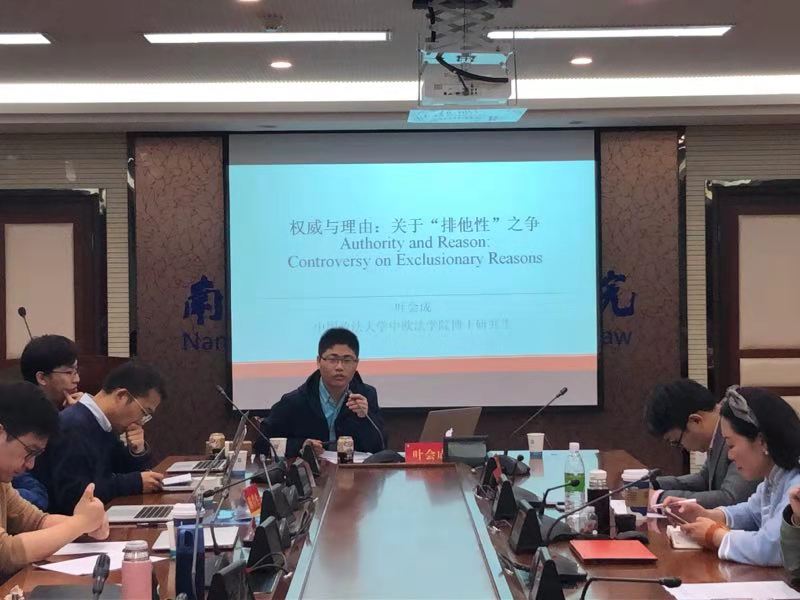
讲座从叶会成博士的报告《权威与理由:关于“排他性”之争》开始,叶会成博士提出了关于排他性理由的两个论证:现象学论证和目的性论证。现象学论证是对“命令”“承诺”“决定”等现象的观察提出了排他性理由的概念;目的性论证指的是对排他性理由的证成,其中主要通过规则的价值指出权威作为排他性理由在于“服务于行动者遵从理由”。
但排他性理由面临两个问题的争议。一个是性质问题,一个是范围问题。性质问题是指是否存在作为二阶理由的排他性理由,即使存在排他性,它是否遵循的是排除模式。范围问题是指即使承认存在排他性理由,那么它的排除范围在哪,是否包括反对权威指令的一阶背景理由。为此,叶会成博士处理了来自Daniel Whiting、Stephen Perry,Michael Moore,Christopher Essert等人的批评。
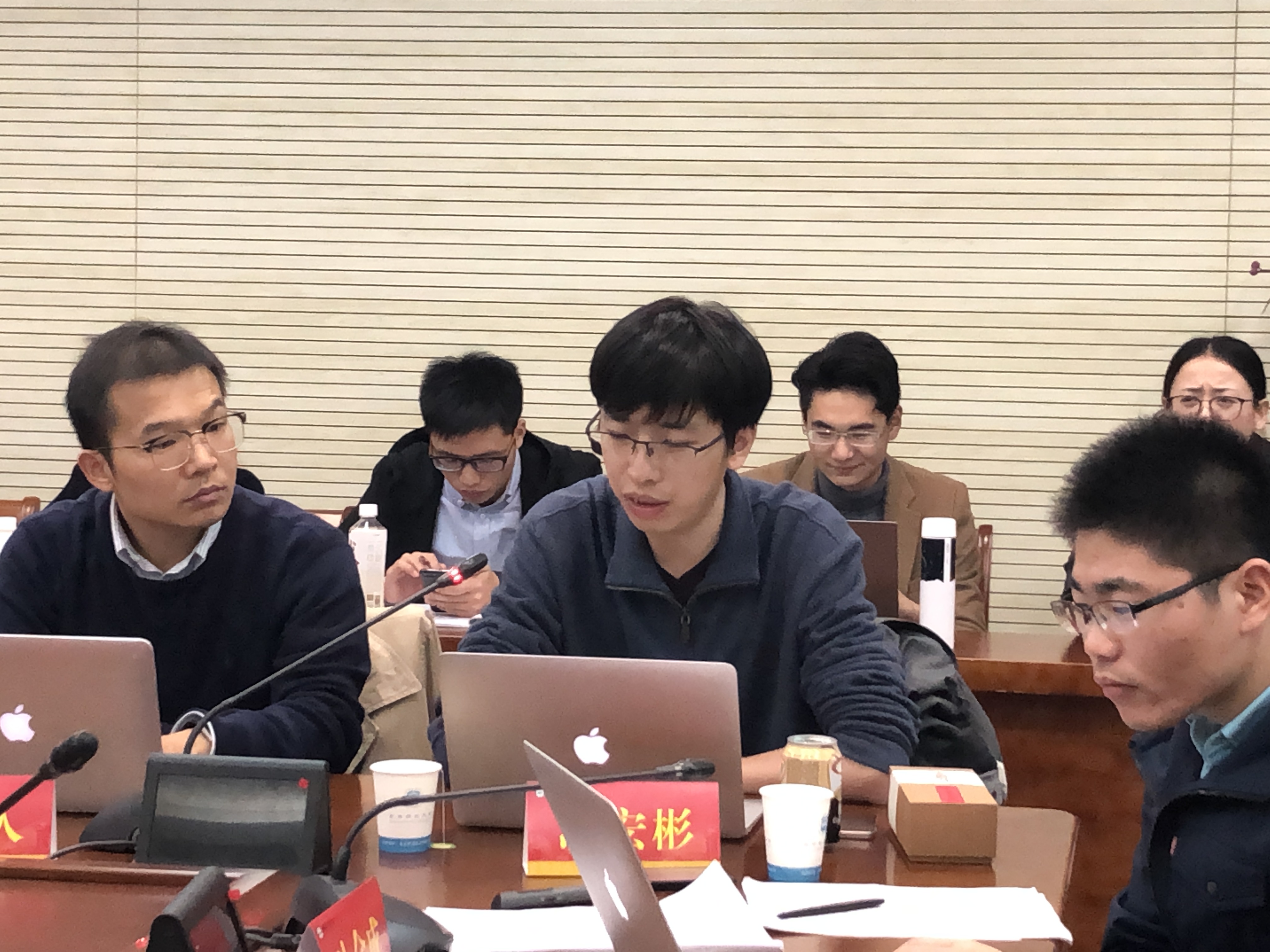
会议的第二阶段是评议部分。首先沈宏彬博士对叶会成的报告进行了点评。他认为虽然叶博士的文章论述了大量的资料,但是文章太长,用力分散,文章中焦点过多,显得论述重点不够突出,缺少自己的论点。此外,在对权威的证成问题上,沈博士也提出了不同的看法,他认为最重要的难题还是处理意志论与理由论之间的张力。
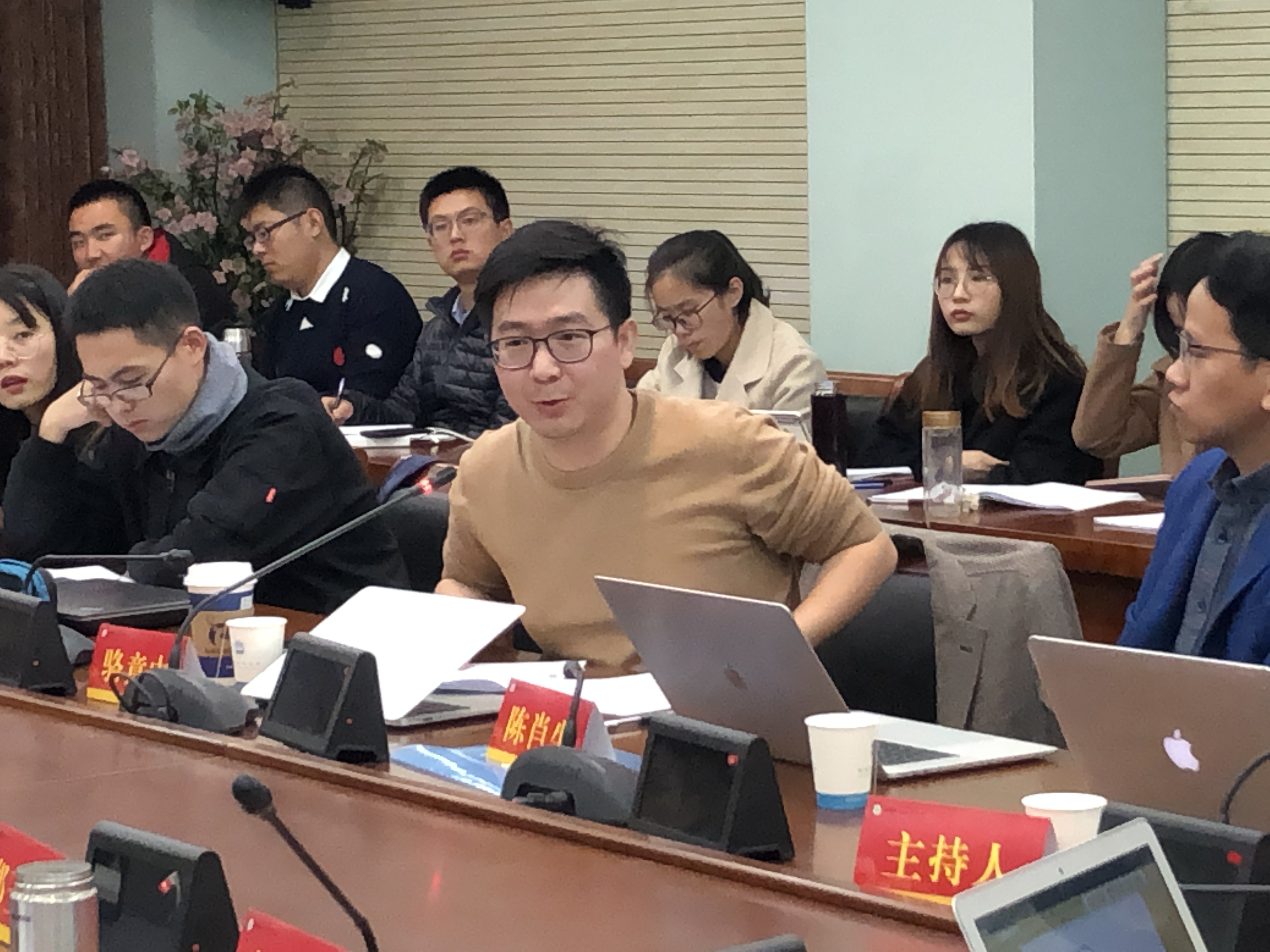
第二位评议人骆意中博士认为叶会成博士的报告一直是在点对点的回应对拉兹关于“实践权威”的观点的批评,且论述的内容缺少连接。此外,文章的写作不够详细与清晰,缺乏对读者的关怀。最后,他对Essert的批评提出了自己的解读。
第三位评议人陈肖生副教授认为,叶会成博士反驳他人文章的论点没有找准确的要点。比如,对Daniel Whiting、Stephen Perry, Michael Moore等人批评的论述与回应,都不够准确与充分。另外,陈肖生认为,论文没有仔细处理拉兹理论内部权威与自治可能存在的矛盾。
第四位评议人郑玉双副教授认为,需要同情地为叶博士的论文做一些解释与辩护,也即要从法哲学角度理解“理由”一词,点明理由概念出现的背景,并在现场举例向同学解释了“理由”的一些现象。并主张,对于法律权威的说明,需要处理法律理由本身的特殊性质。
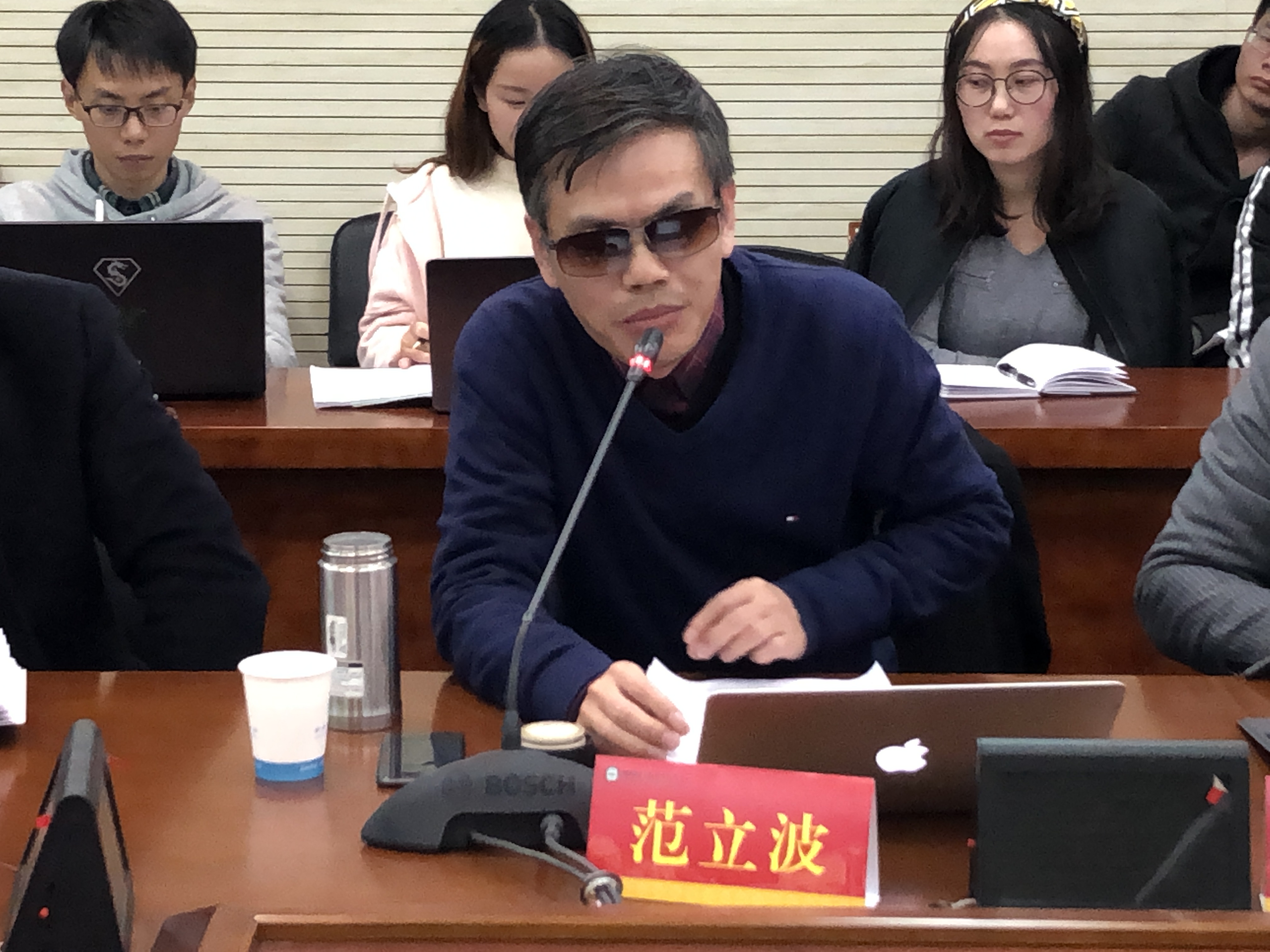
第五位评议人是范立波教授,他的评议既包括了研究方法,也包括了实质观点部分。在研究方法上,范教授认为真正的研究要从问题开始,要从问题的内部开始,关注问题的问题性,而不是局限于对既有文献的梳理。在实质内容上,范教授认为,权威是一种施加内容独立的于断然性的理由,证成权威的关键就在于阐明权威为何能够创造一个对象的性质不能给出的理由的情形。
会议的第三阶段是回应阶段。叶会成博士首先回应了沈博士的意见,认为本文的讨论并不集中在“法律权威”本身,很多时候只是以“法律权威”在举例;权威指令只是扮演一个理由中介的角色,权威本身没有改变依赖性理由,而是把原有的理由进行传递。针对骆意中博士的评议,叶会成博士认为他的文章确实在写作上不够清晰与详细,并提出了对Essert批评的自己的理解。针对陈肖生副教授的评议,叶博士认为陈教授的意见给了他进一步钻研的启发,并对文章中的例子及拉兹的观点进行了进一步的阐释。针对郑玉双老师的评议,叶会成博士认为给了他很大的帮助,帮他做了进一步的阐释。而对范立波老师的评议,叶会成赞成了他指出的研究方法的缺陷,在内容上,他也赞成了范老师对权威问题的分析,并认为需要对Ruth Chang的理论做进一步探讨。
在交流互动环节,在座的同学就郑玉双老师举的例子进行了询问,而郑老师也耐心进行了解释。在座的另一位同学认可郑老师的观点,即法律是二阶的理由,我们的内心选择是一个一阶的理由,并提出问题:法律权威为什么是二阶的,法律权威如何分等级,法律是否如同自然现象一样具备客观性。随后,郑玉双老师和陈肖生老师分别回答了这个问题,即法律或自然都是以“理由”的形式影响我们的实践。热烈的互动引起了现场的小高潮。

在讲座最后,范立波教授对本次讲座进行了简要的总结,提出写学术论文要有问题意识,写一篇论文必须要准确理解论文里要涉及的概念,这样才能写出一篇好文章。同时,范老师也指出本次沙龙涉及的问题比较深奥,对同学们的知识储备要求很高,非常感谢与会同学的参与,同学们也以热烈的掌声予以了高度的认同。
图:郭欣欣 文:缪凯
Revisiting Authority and Reason
We are so glad that to invite doctor Huicheng Ye to give a speech at NNU Law School at November 17, 2019. His topic is “Authority and Reason: Controversy on Exclusionary Reasons”, which is part of his dissertation. We are also glad to have some most outstanding scholars who works on legal and political philosophy to attend this lecture, they are Libo Fan, Xiaosheng Chen, Yushuang Zheng, Yizhong Luo, Hongbin Shen, Jian Yang, and Hui Chen.
Huicheng argues that the most valuable contribution of Professor Raz makes to legal and political philosophy is his theory of authority, among which exclusionary reasons have a significant role, if not the only one. The concept of a exclusionary reason has two problems that needs to be solved, one is about its nature or existing question, the other is its scope question. Some scholars provide arguments against its existence, including Daniel Whiting, Stephen Perry, Michael Moore; some scholars think that even if there is a special type of reason is exclusionary reasons, we still need to ask which scope it intends to exclude.
Based on detailed analysis and powerful arguments, Huicheng believes that all these criticisms do find very important points, but they do not succeed to turnover Raz’s arguments. We have enough reason to support his standpoint and use the concept of an exclusionary reason to justify the legitimacy of authority.
After Huicheng finishing his speech, our seminar proceeds to the stage of reviewing. Doctor Shen thinks that the biggest problem of Huicheng’s paper is his writing, as he makes a grand plan but fails to provide enough arguments; Shen also gives some disagreements on the problem of justification of authority. Associate Professor Chen then points out that he has some different readings to those articles cited in Huicheng’s paper, so his review focuses on how to correctly understand these references. The next reviewer is Doctor Luo, he argues that we should not limit our attention only to Raz’s views, instead we need to reflect the problem itself directly, if so he believes we will get more fruitful improvements. Associate Zheng provide some sympathetic support to Huicheng’s paper, and some explanations that why the concept of reason is so important to current legal and political philosophy. Lastly, Professor Fan gives two suggestions about Huicheng’s paper, one is about research methods, the other is the problem of justification of authority.
The third section is response and discussion stage. Huicheng agrees that his paper has some serious problems on writing methods and substantial arguments both, and he also tries his best to answer some questions given by the five reviewers. There are also some PhD students and graduate students who attend and make contributions to this successful lecture.

